
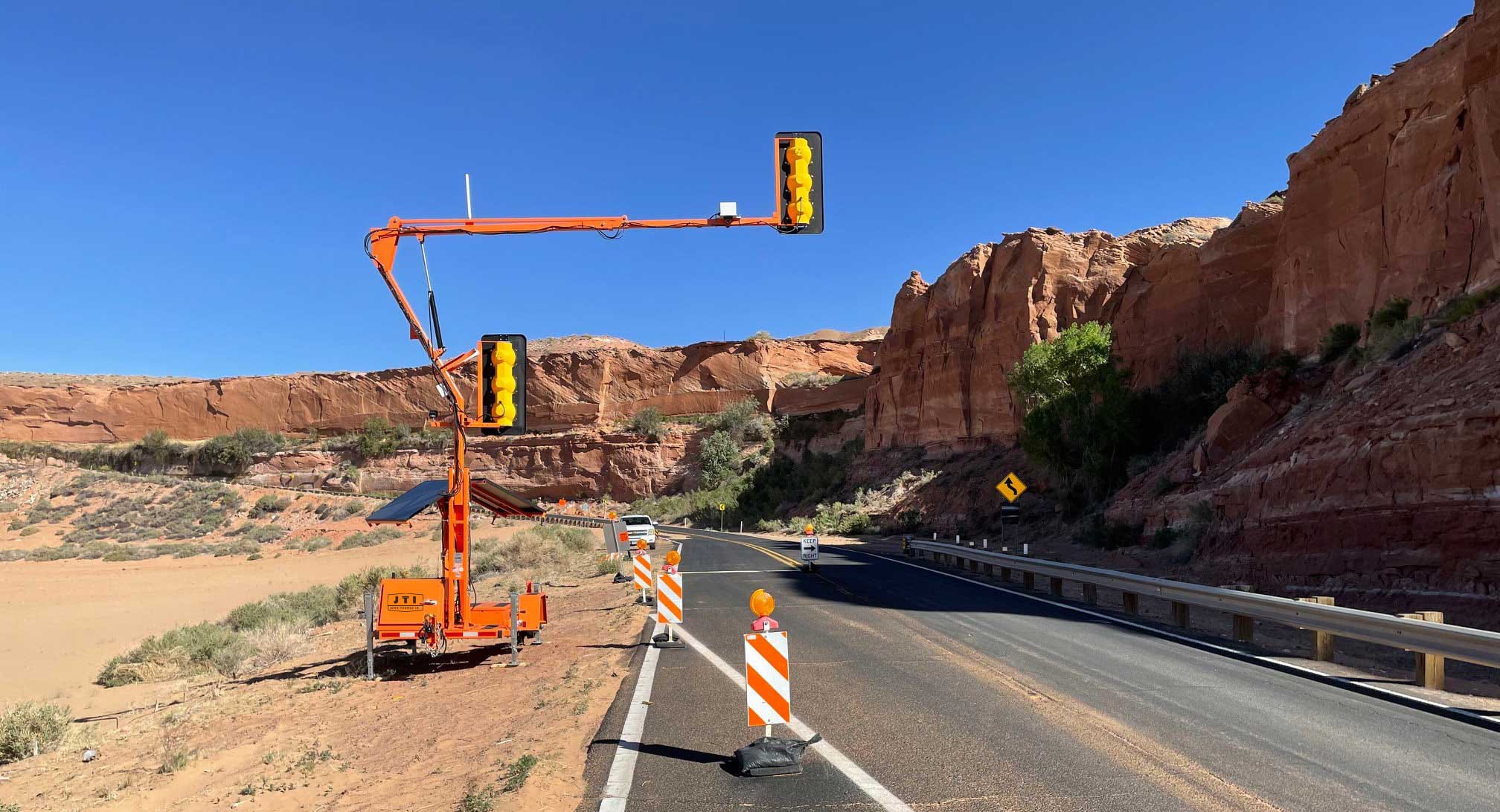
Pilot car operations work zone methods give crews a reliable way to move traffic through longer or more complex one-lane, two-way sections when simple flagging or device-only control is not enough. A pilot car leads a queue of vehicles through the controlled area so drivers follow a single, clear path instead of guessing when it is safe to proceed. This approach is especially useful when sight distance is limited, the work zone is long, or side streets and driveways create extra conflict points.
The goal is consistent, predictable movement while keeping workers farther from live traffic. Portable traffic signals and automated flagger assistance devices (AFADs) can support the same operation by holding traffic at each end until the pilot car is ready for the next group.
Table of Contents
What Are Pilot Car Operations in a Work Zone?
A pilot car is an official vehicle that guides a line of traffic through a temporary one-lane section. The driver of the pilot car leads the queue from one end of the work zone to the other. Once the last vehicle clears the controlled section, the process reverses for the opposite direction [1].
Core purpose: Reduce driver uncertainty and prevent opposing vehicles from meeting inside the work area.
Typical elements include:
- A clearly marked pilot vehicle
- “PILOT CAR FOLLOW ME” signing on the pilot vehicle
- Control points at each end of the one-lane section
- Coordination with flaggers, AFADs, or portable traffic signals
- Advance warning signs so drivers know what to expect
Pilot car control is one of the recognized methods for one-lane, two-way traffic control under temporary traffic control principles. It works best when the controlled section is long enough that drivers cannot easily see the far end or when the geometry is complex [1].
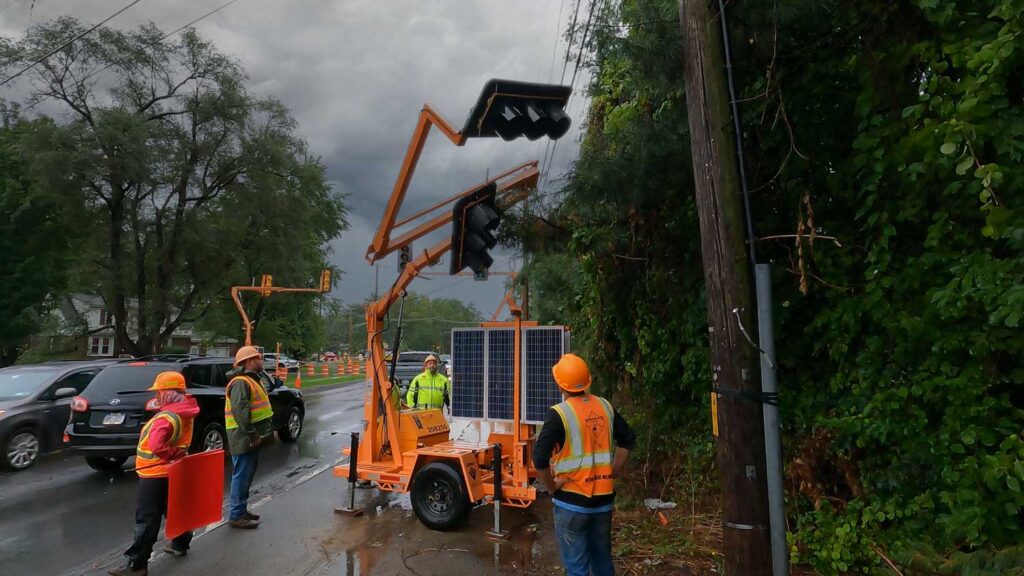
When Are Pilot Car Operations Work Zone Methods Preferred Over Flaggers Alone?
Flagger-only control works well for short sections with good visibility. Once the distance between control points grows or sight lines become blocked, coordination becomes harder and queues can become unpredictable.
Use a pilot car when:
- The one-lane section is long enough that opposing ends are not clearly visible
- Work zone geometry includes curves, hills, or barriers that limit sight distance
- Multiple driveways or side streets enter the controlled section
- Traffic volume creates longer queues that need orderly release
- Night or low-visibility conditions make driver judgment less reliable [1][2]
Comparison snapshot
| Condition | Flaggers Alone | AFAD Supported | Pilot Car Added |
|---|---|---|---|
| Short zone, clear sight distance | Usually sufficient | Strong option | Often unnecessary |
| Longer zone, limited visibility | Difficult | Helpful | Preferred |
| Multiple access points | Higher risk | Helpful | Strongly preferred |
| Night operations | Higher workload | Better positioning | Adds clear guidance |
| High queue formation | Harder to manage | Improves holding | Improves orderly release |
A pilot car does not replace the need for proper control at each end. It adds a moving reference that drivers can follow, which reduces hesitation and wrong-way movements inside the work area.
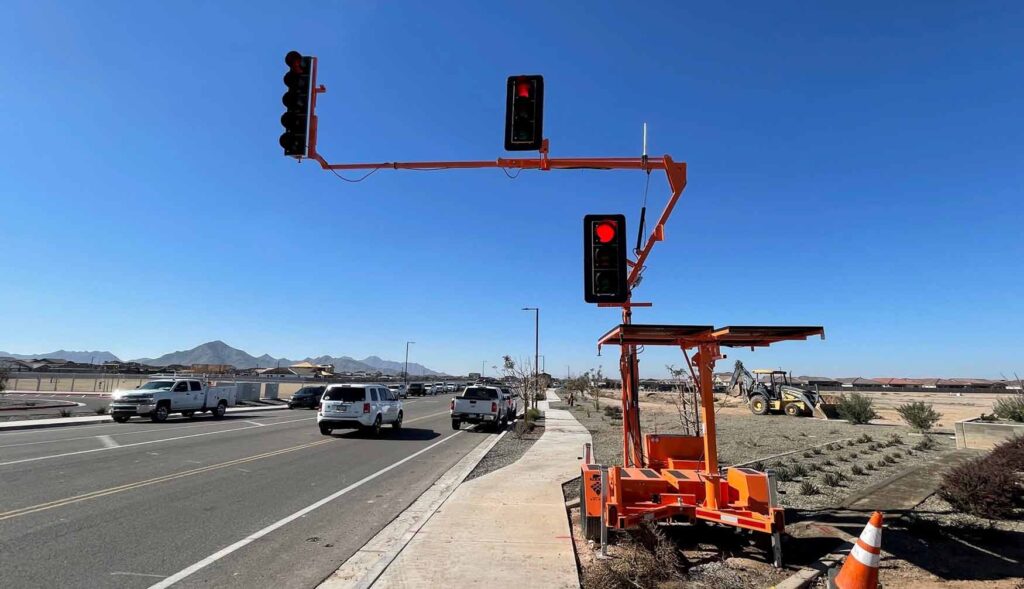
How Do Pilot Car Operations Work with Portable Traffic Signals?
Portable traffic signals can hold traffic at each end of the one-lane section while the pilot car makes its run. The signal stays red for the waiting direction until the pilot car and its queue have cleared and the operation is ready to reverse.
Typical sequence:
- Signal at End A displays red; traffic waits.
- Pilot car positions at the head of the queue at End A.
- When ready, the signal allows the pilot car and following vehicles to enter.
- Pilot car leads the group through the work zone to End B.
- After the last vehicle clears, the operation switches.
- Signal at End B releases the next queue behind a pilot car moving in the opposite direction.
Practical advantages
- Signals provide a consistent stop indication that drivers already understand
- Workers can stay farther from the travel lane
- Timing and holding are more predictable than pure manual control on longer jobs
- Remote monitoring options can support oversight when available
Portable signals work especially well when the work zone will remain in place for an extended period or when traffic volumes justify a more formal control method than continuous flagging [2].
How Do Pilot Car Operations Work with AFADs?
AFADs allow a flagger to control the stop/slow or red/yellow indication from a safer position outside the travel lane. In a pilot car operation, the AFAD holds traffic at the entrance while the pilot car is staged and ready.
Coordination points:
- AFAD remains in the stop condition until the pilot car is in position and the path is clear
- Once the pilot car begins the run, the AFAD stays in stop for opposing traffic
- After the queue clears the far end, the AFAD at the opposite end prepares for the return trip
- Radio or visual communication between the AFAD operator and pilot car driver keeps timing consistent
AFADs are particularly useful when crews want to reduce worker exposure but still need the flexibility of human oversight. They pair well with pilot car control on medium-length zones where full portable signal setups may not yet be justified [2].
Quick field note: Maintain clear line of sight or reliable communication between the AFAD operator and the pilot car. If communication breaks down, the operation should pause until coordination is restored.
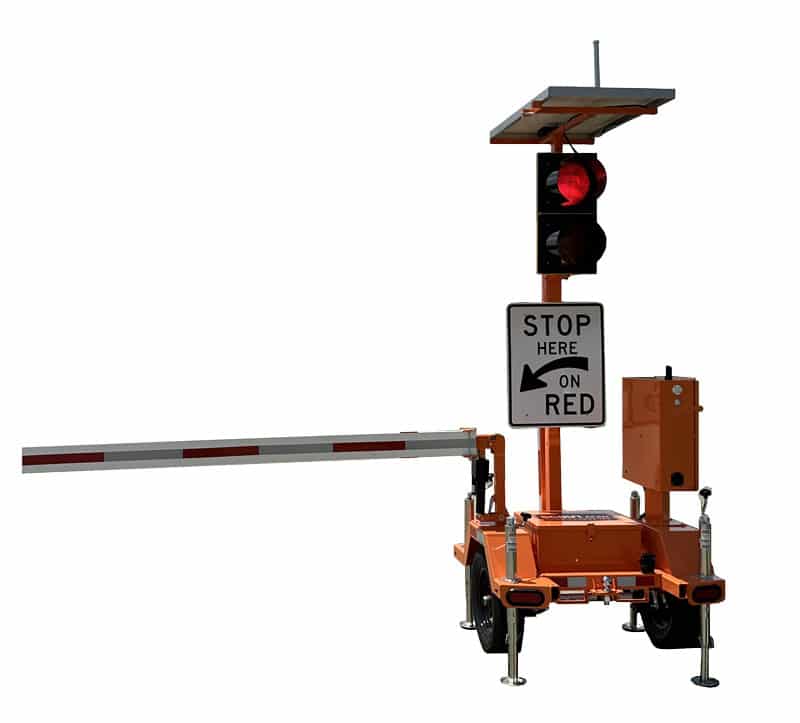
What Signing and Communication Are Required for Pilot Car Control?
Drivers need clear advance notice that they must wait for and follow the pilot vehicle through the controlled section [1].
Essential elements:
- “PILOT CAR FOLLOW ME” sign mounted on the pilot vehicle (rear or top position as required)
- Advance warning signs that prepare drivers for one-lane operation and potential stopping
- “PILOT CAR IN USE” or similar message where project or agency standards call for it
- Proper flagging or device control at each end so vehicles do not enter without the pilot car
Communication practices that improve safety:
- Radio contact between pilot car driver and end-point operators
- Agreed release signals so queues only move when the path is confirmed clear
- Consistent messaging to drivers: wait for the pilot car, follow it through, do not pass
Signing should match the current project traffic control plan and any state or local supplements. Drivers who understand the system early are less likely to enter early or become confused inside the work zone.
What Are the Key Limits and Site Conditions for Pilot Car Use?
Pilot car operations are not automatic for every one-lane job. Several site factors determine whether the method is appropriate.
Key limits and conditions:
- Length of the controlled section: longer zones with poor end-to-end visibility favor pilot car use
- Sight distance: curves, crests, vegetation, or barriers increase the value of a pilot car
- Access points: driveways and side streets inside the zone require extra planning so entering vehicles do not conflict with the guided queue
- Traffic volume: higher volumes create longer queues that benefit from orderly, pilot-led release
- Work duration: short mobile operations may not justify the method; longer stationary work often does
- Available personnel and equipment: a dedicated pilot vehicle and coordinated end control are required [1][2]
When these conditions are present, pilot car control reduces the chance of opposing vehicles meeting inside the work area and gives drivers a single, visible leader to follow.
What Common Mistakes Happen with Pilot Car Operations?
Even experienced crews can run into problems when details are overlooked.
Frequent issues:
- Starting the pilot car before the opposing direction is fully stopped and clear
- Allowing vehicles to enter behind the pilot car after the formal queue has started
- Poor radio discipline between the pilot car and end-point operators
- Inadequate advance signing so drivers do not understand they must wait
- Ignoring side-street or driveway movements inside the controlled section
- Continuing the operation when sight lines or communication are compromised
- Treating the pilot car as optional “extra help” instead of a formal control method
Prevention focus: Treat the pilot car as part of a complete system. End control, signing, communication, and the moving pilot vehicle must work together. If any element fails, pause and reset before releasing the next queue.
How Should Night or Low-Visibility Conditions Change the Approach?
Night and low-visibility conditions increase the value of clear, positive guidance. Drivers have less visual information, so a well-marked pilot car and strong end control become more important.
Adjustments that help:
- Ensure the pilot vehicle is highly visible with proper lighting and signing
- Confirm that AFAD or signal locations are illuminated as required
- Increase reliance on radio confirmation before releasing any queue
- Allow extra time for drivers to recognize the pilot car and respond
- Recheck advance warning signs for visibility under nighttime conditions
- Consider shorter release groups if queues become difficult to manage
Low visibility does not automatically require a pilot car, but it strengthens the case for using one when the zone is long or complex. The same principles apply in heavy rain, fog, or other conditions that reduce driver sight distance.
Key Takeaways
- Pilot car operations work zone methods guide traffic through longer or complex one-lane sections with a clear lead vehicle
- Portable traffic signals and AFADs can hold traffic at each end while the pilot car leads the active queue
- Use a pilot car when sight distance is limited, the zone is long, or access points create extra conflict
- Required signing and reliable communication between the pilot car and end control are essential
- Night and low-visibility conditions increase the need for positive guidance and careful coordination
- Treat the pilot car as part of a complete system rather than an optional add-on
- For expert guidance on pilot car operations and temporary traffic control equipment, contact the JTI team at 888.447.7263 or request a quote through our contact page.
References
Federal Guidance
[1] Manual on Uniform Traffic Control Devices (MUTCD), Part 6 – Temporary Traffic Control, sections addressing one-lane, two-way traffic control and the pilot car method, Federal Highway Administration.
Temporary Traffic Control Practices
[2] Guidance on the Use of Automated Flagger Assistance Devices (AFADs), American Traffic Safety Services Association (ATSSA), 2025 update under FHWA Work Zone Safety Grant.
[3] Temporary Traffic Control for One-Lane, Two-Way Operations, ATSSA / FHWA Work Zone Safety Grant guidance covering AFADs, portable traffic signals, and pilot car coordination.