
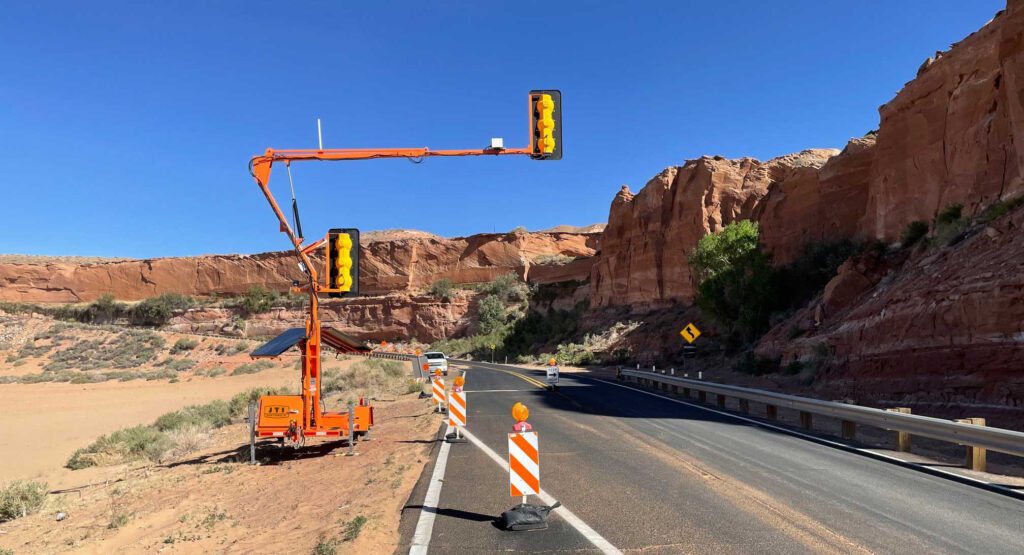
What Are Portable Traffic Signals and Why Are They Used in Utility Work Zones?
Portable traffic signals for utility work zones are temporary trailer-mounted or cart-based systems that function like permanent traffic lights to safely manage vehicle flow around maintenance, repair, or infrastructure activities.
Utility crews frequently face short-duration lane closures, one-lane two-way operations, and the need to minimize exposure in active roadways. These systems provide consistent signal control without relying solely on human flaggers.
Table of Contents
How Do Portable Traffic Signals Improve Safety in Utility Work Zones?
Utility work zones rank among the highest-risk environments for roadway workers due to proximity to moving traffic. Portable traffic signals reduce flagger exposure in the roadway, lowering incident potential.
Key safety advantages include:
- Remote operation capabilities keeping supervisors off the shoulder
- Standardized signal timing that reduces driver confusion
- Integration with monitoring systems for 24/7 oversight
- Compliance with crashworthy standards for supports and placement
Studies from the Texas Transportation Institute highlight their effectiveness in maintenance operations by providing reliable control where flaggers face fatigue or visibility issues.
When Should You Choose Portable Traffic Signals Over Flaggers or AFADs?
Selection depends on project duration, traffic volume, sight distance, and site constraints.
| Scenario | Recommended Solution | Primary Reason |
|---|---|---|
| Very short duration (<1 hour) | Flagger or AFAD | Maximum flexibility and quick setup |
| Extended one-lane closures | Portable Traffic Signals | Consistent control, reduced worker fatigue |
| Higher volume or complex sites | Portable Signals + Remote Management | Real-time adjustments and monitoring |
| Night or low-visibility | Portable Signals with illumination | Better driver recognition |
Portable signals often prove superior for multi-day utility projects by maintaining steady flow and freeing crews for core tasks.
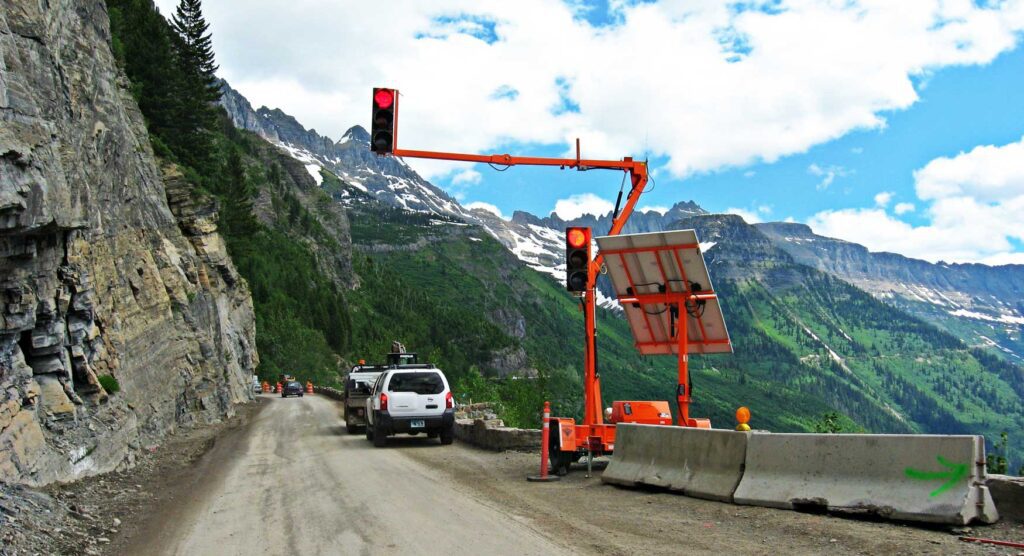
Key MUTCD Requirements for Portable Traffic Signals in Utility Operations
The Manual on Uniform Traffic Control Devices (MUTCD) Part 6 outlines standards for temporary traffic control in utility work.
Portable signals must achieve proper visibility, mounting heights, and timing. Key elements include advance warning signs, signal-ahead indicators, and crashworthy supports. Placement must ensure clear sight lines, with signals positioned to manage alternating flow effectively in one-lane two-way setups common to roadside repairs.
Step-by-Step Setup Guide for Portable Signals in Roadside Utility Work
Proper deployment follows MUTCD-aligned practices for optimal performance.
- Conduct site assessment including traffic counts, zone length, and sight distance.
- Position signal units at each end of the controlled section with adequate setback.
- Configure timing parameters based on demand, clearance intervals, and maximum wait times.
- Install supporting channelizing devices, signs, and warning lights.
- Test operation, verify remote connectivity (e.g., Galaxy RMS), and monitor initial traffic response.
Benefits of Solar-Powered and Remote-Managed Systems for Utility Crews
Solar-powered portable traffic signals equipped with remote management reduce dependency on diesel generators while enabling real-time oversight.
Primary benefits:
- Lower operational costs through reduced fuel and maintenance
- Extended runtime with battery/solar reliability
- Remote video feeds and alerts for quick issue resolution
- Enhanced sustainability for environmentally sensitive projects
Systems like JTI’s Galaxy Remote Management System allow crews to monitor queues and adjust timing from anywhere, ideal for dispersed utility operations.
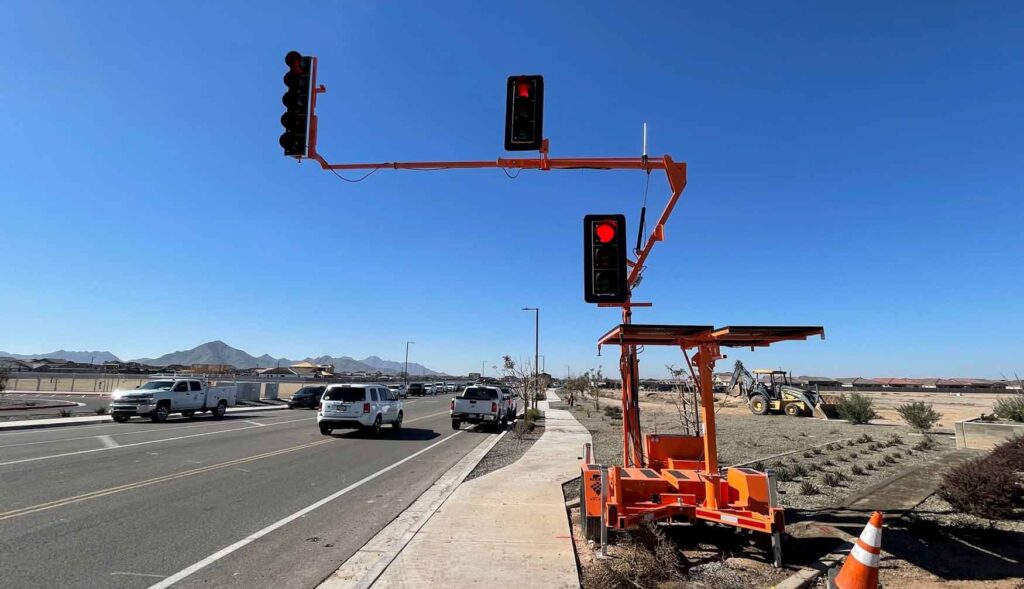
Common Challenges and Solutions in Utility Work Zone Traffic Control
Variable traffic patterns, nighttime work, tight shoulders, and emergency repairs present recurring issues.
Solutions include hybrid setups (signals paired with AFADs where needed), radar detection for adaptive timing, and advance planning with state DOT guidelines. Proper training on MUTCD compliance further mitigates risks.
Real-World Applications and Case Studies
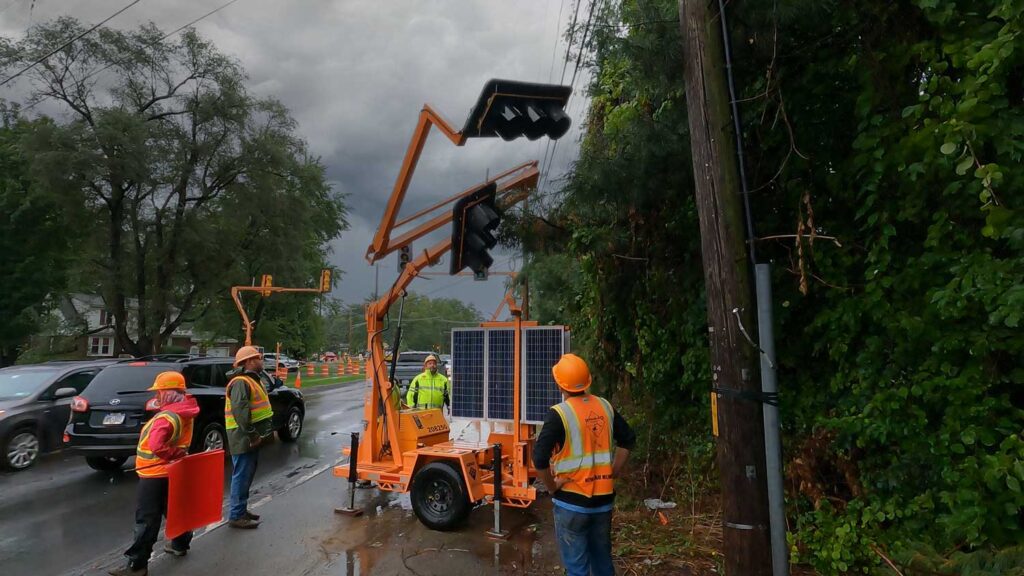
Portable traffic signals support diverse utility scenarios including pavement repairs, bridge maintenance, emergency restorations, and roadside infrastructure work across the U.S.
Agencies and contractors report improved safety metrics and reduced delays when deploying these systems in place of traditional flagging for suitable durations.
Key Takeaways
- Portable traffic signals for utility work zones significantly reduce worker exposure while maintaining reliable traffic flow.
- MUTCD compliance combined with solar and remote technologies maximizes efficiency and safety.
- They provide a strong alternative to flaggers or AFADs for many extended or higher-volume utility projects.
- Proper site assessment and setup are essential for optimal performance.
- Modern systems like Galaxy RMS enable proactive management from remote locations.
References
MUTCD and Federal Guidelines
[1] FHWA. MUTCD 11th Edition – Part 6 Temporary Traffic Control.
[2] Texas Transportation Institute. Feasibility of Portable Traffic Signals to Replace Flaggers in Maintenance Operations.
Industry Practices and Applications
[3] JTI John Thomas Inc. Galaxy Remote Management System.
[4] Case Studies on Technology Solutions for Temporary Traffic Control.